

In this issue
Archives
Side Articles
Our Sponsors





October 2026 BAHREC Newsletter

BAHREC | Message from Leadership
Brad Margolis, President, 2026-2027
Hello BAHREC Members,
Last month we hosted our first CHRO Executive Dinner and Networking Evening, and it was everything we hoped a gathering of this kind could be. A smaller group, a longer evening, and conversations that went well past the surface. Members shared real situations they're navigating, tested ideas with peers, and left with perspectives they didn't arrive with. It was a delight to be part of, and it confirmed something we've heard consistently in our member outreach: there's genuine appetite for settings that allow for depth rather than breadth. We'll be building on this format.
One topic that surfaced repeatedly that evening, and continues to come up in conversations across our community, is the evolving regulatory and legal landscape around diversity, equity, inclusion, and belonging.
This is genuinely hard terrain to navigate. Guidance has shifted considerably, and organizations are working to understand what's required, what's permissible, and what's prudent. For those of us operating across multiple states, or with global footprints, the picture becomes more complex still. Meanwhile, our employees are watching closely, our boards are asking questions, and our teams are looking to us for direction.
What makes this particularly demanding is that the questions aren't purely technical. They touch on organizational values, employee trust, and how people experience belonging at work. Reasonable leaders are reaching different conclusions about how to proceed, and each organization's context matters enormously.
This is exactly where a community of peers earns its value. None of us can resolve this in isolation, and there's no authoritative playbook to follow. But being able to hear how others are thinking about it, what approaches they've taken, what they've learned, and where they've encountered difficulty, is meaningfully useful. Not to arrive at a consensus position, but to think more clearly about our own circumstances. The willingness of members to speak candidly about complicated situations is one of the things that makes BAHREC worth being part of.
If this is a topic you're wrestling with, I'd encourage you to raise it at an upcoming gathering. You'll almost certainly find others in the same position.
Thank you, as always, for the work you do and for your contributions to this community.
Warm regards,
Brad Margolis
President, BAHREC
Insights From Our Latest Program
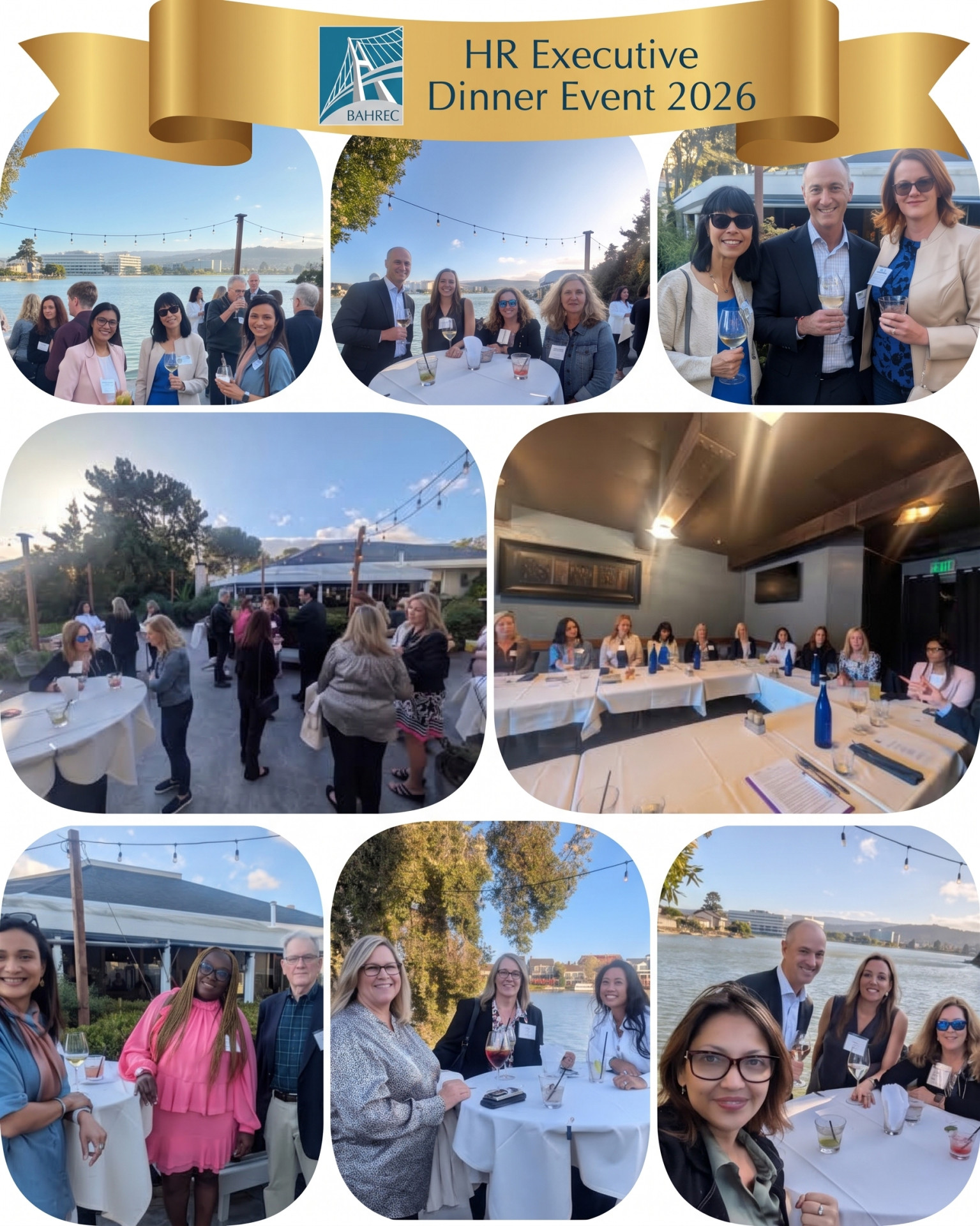
HR Executive Dinner at Mistral
What’s the Weather Inside Your Organization?
This very prompt kicked off a recent invitation-only HR Executive Dinner at Mistral, where talent leaders gathered around the table for unvarnished, authentic, and candid dialogues, leaving formal slide presentations at the door.
The answers were surprisingly different.
For some, it was Spring: rebuilding after layoffs, creating new energy, and redefining culture. Others described peak Summer - hot, demanding, and moving fast, with constant pressure from the business. Some were experiencing Fall, preparing for another cycle of change. And for others, it felt like Winter, with uncertainty and cautious investment.
This naturally sparked an overarching query: Are we measuring engagement the same way we did a few years ago?
Leaders shared how they are moving beyond annual engagement scores toward listening for signals through manager conversations, retention patterns, organizational changes, productivity and employee sentiment.
One theme kept coming back: Trust.
How do you tell employees the truth about difficult business realities—restructuring, economic pressure, changing priorities, or AI, without losing engagement?
The answer isn't hiding the storm. It is helping people understand why it is happening, what is within their control, and where the organization is going.
That challenge is becoming even more complex. Trust becomes even more important as HR leaders navigate another source of uncertainty: AI.
Interestingly, there wasn't one shared view of AI around the table. Some leaders see it as a potential job replacer, raising concerns about workforce disruption and even broader economic consequences. Others see AI as a catalyst, an efficiency booster that can eliminate low-value work, augment human capability, and create new opportunities.
Both perspectives are shaping how organizations approach workforce planning, skills and leadership.
At the same time, organizations are facing accelerating AI adoption and a workforce transition as experienced employees approach retirement. Gen Z and Millennials increasingly describe career success not just through money, but meaning, well-being, learning, and flexibility, rather than simply climbing the corporate ladder. Deloitte’s 2025 research found only 6% identified reaching senior leadership as their primary career goal.
Different expectations. One rapidly changing workplace.
Perhaps the real question for HR leaders is not “What is our engagement score?”
It is:
“What season are our people experiencing—and are we prepared to lead them through the next one?”
Upcoming Monthly Event
Rethinking Performance — Stop Managing Performance. Start Enabling
October 21, 2026 | 5:15 PM–7:30 PM
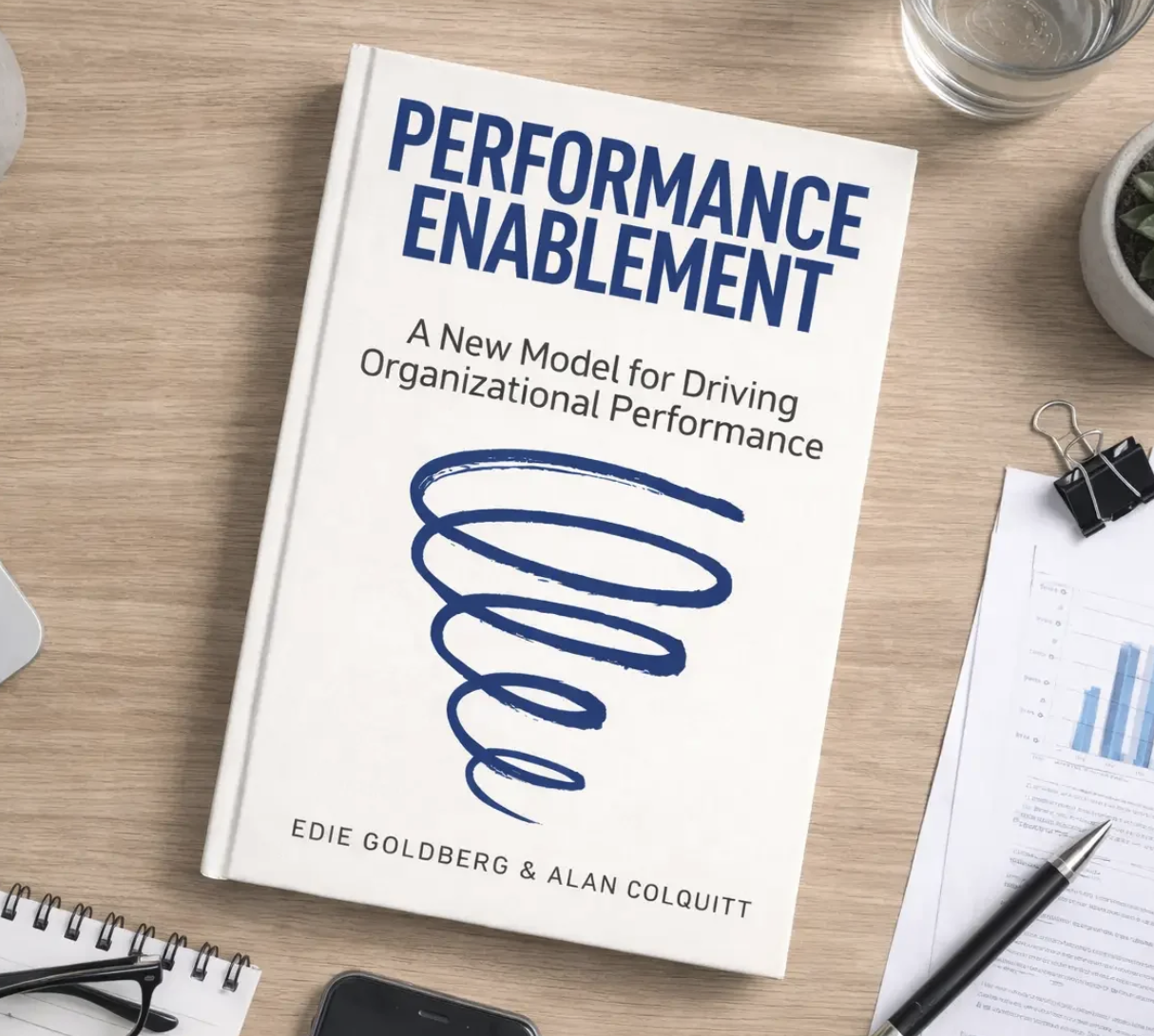
Join BAHREC for an engaging session with Edie Goldberg, Ph.D., globally recognized talent management and future-of-work expert and co-author of Performance Enablement: A New Model for Driving Organizational Performance.
Drawing on scientific research and a Bay Area company case study, Edie will introduce a more humanistic, effective approach to unleashing individual and organizational performance—one that moves beyond traditional performance management toward inspiring, supporting, and developing employees to do their best work.
Participants will explore how organizations can:
- Rethink traditional performance management practices
- Build a performance approach grounded in science and today’s workplace realities
- Learn from a real-world Bay Area case study
- Assess where their organization is on the journey toward performance enablement
Bonus: The first 10 registrants will receive a complimentary copy of Performance Enablement by Edie Goldberg and Alan Colquitt.
SHRM & HRCI: This program is certified for 1.5 recertification credit hours.
Register Now: Register for the Event
Platinum Sponsor: EPIC

Inclusive Leadership
A message from BAHREC VP of Diversity, Equity, and Inclusion, Porsche C. Williams:
A message from BAHREC VP of Inclusion, Porsche C. Williams:
October 2026 Inclusive Leadership
Few areas of organizational life have been examined as closely over the past two years as DEIB. Legal and political pressure has led many organizations to reconsider how they talk about this work. Some have chosen silence. Some have kept their programs but changed the language. Others have kept the language while the programs have thinned out. Each of these choices sends a message, intentionally or not. How an organization communicates about DEIB is as important as what it does. When worlds and action don’t align, employees and the public notice, and trust erodes - quickly. Here are four reasons why communication matters so much to DEIB and how we can close the gap.
Communication starts inside the organization: Internal communication does more than announce programs. When it works, it helps employees understand why the work matters and see themselves in it. Employees who understand the purpose are more likely to support it and to speak about it credibly with others. Internal communication also helps surface areas of resistance such as employees who don’t believe DEIB should be a priority or doubt inequities exist in their workplace. Both reactions provide useful information. Take the time to explain the reasons behind each initiative and how it aligns with organizational goals and values. Ensure employees have forums and opportunities to raise questions, make suggestions, and share concerns without penalty.
Credibility depends on not overstating: Claiming more commitment than an organization can demonstrate is called, “diversity-washing,” and carries risks. When the gap is discovered, it damages the organization’s reputation and weakens the credibility of DEIB work more broadly. A related problem is timing. When DEIB communications appear mainly around heritage and identity awareness days, it can look like a campaign rather than a true commitment to inclusion. Consistency across the year signals that the work is part of how the organization operates. Build DEIB updates into regular business communications, such as all-hands meetings, quarterly reports, and leadership updates. Report progress honestly, including where goals have not been met because candor and transparency build trust.
Silence is also a message: When DEIB communication draws criticism, the easiest response is often no response. But silence is read as an answer. If an organization responds quickly to customer service complaints yet says nothing when its values are challenged, observers may conclude those values were never firmly held. Not every comment deserves a reply, and some criticism is unrelated to DEIB at all. The goal is to respond thoughtfully and consistently to substantive concerns, with clear explanations of what the organization values and how its practices reflect that. Prepare clear, factual responses to criticism in advance and hold values-related concerns to the same standard of responsiveness as operational ones.
Inclusive communication is about how: Inclusion applies to the form of communication, not just its subject. A message about belonging that doesn’t reach part of the workforce, or reaches them in a form they can’t easily use, undermines itself. Translation alone does not make a message inclusive. Messages resonate more when they reflect familiar cultural references, travel through relationships people already trust, and show respect for people’s identities and lived experiences. Use trusted messengers such as ERGs to review major communications such as benefits, policy changes or safety information for accessibility across language, literacy, disability, and work arrangement.
Transparent, consistent, and authentic communication is a vital part of DEIB. Candidates, employees, and communities are paying close attention to whether organizations mean what they say, especially now. This October, I challenge you to ask: Can we stand behind everything we are saying? And are we saying it in a way that everyone can hear?
Source: Einwiller, S., & Wahl, I. (2025). Editorial for the special issue "Valuing Diversity in Corporate and Marketing Communications"
Cultural Observances: October 2026
- 10/10: World Mental Health Day
- 10/12: Indigenous Peoples’ Day / Columbus Day
- 10/15: National Latinx HIV/AIDS Awareness Day
- 10/16: Spirit Day
- 10/19: National LGBT Center Awareness Day
Member Spotlight
Stephanie Lau-Chen, Managing Director, HR & Administration, QuestBridge

“ I joined BAHREC because I wanted to be a part of an HR group that values continuous learning, connecting, and community. Our profession and the world are changing and evolving, and I want to contribute as well as stay on top of all of the latest best practices and emerging topics in our field.“
~Stephanie
